Navigating Data Center Proposals: Policy Options and Community Engagement
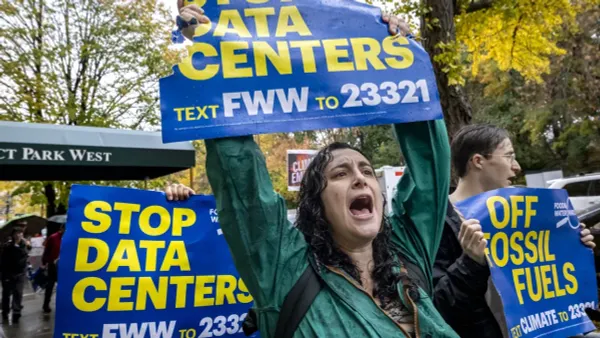
Colorado Springs officials are considering a range of policy options to manage data center development, following a report that advises against a moratorium but recommends tighter regulations on land use, environmental impact, and public input.

In Colorado Springs, CO, a report from the Romer Institute of Evidence-based Policy has suggested that a moratorium on data center development would only delay projects without establishing substantive standards. Instead, the report, cited by Axios, recommends a framework of 14 policy options for city planners. These options include creating a distinct land-use category for data centers and re-evaluating the 10-megawatt threshold that currently exempts smaller facilities from utility safeguards for large customers. The report also emphasizes neighborhood protections, such as requiring independent noise studies, considering limits on low-frequency sound, and formalizing when developers must assess water use. To enhance public involvement, the report proposes community forums and mandatory public hearings for projects exceeding defined thresholds. Furthermore, it suggests setting baseline requirements and then negotiating additional protections for individual developments, as well as planning for potential downsides like guarantees for abandoned facilities and a consistent method for measuring fiscal impacts. The city's ownership of its utilities provides it with leverage over development approvals and access to power and water, according to Axios. The current moratorium in Colorado Springs is set to end on April 13, one week after the municipal election, and the City Council must approve any land-use changes and utility safeguards.
Strategies from Companion Communities
Other communities have employed various strategies to address data center proposals, ranging from extended moratoria to recall elections and public utility board changes.
Moratoria and Extensions
In Beaufort County, SC, the County Council voted to extend a potential data center moratorium from one year to two years, as reported by WSAV News 3. This extension, approved 7-3 in its first reading, was requested by District 7 Councilmember Logan Cunningham to allow recently elected councilmembers to participate in the discussion. A second reading is scheduled before final approval.Recall Elections and Transparency Concerns
Lowell, MA, has seen three residents enter a recall election to unseat members of the Lowell Township Board of Trustees over their handling of Microsoft's data center plan, according to mlive. The recall effort, chaired by Melissa Tichelaar, was fueled by the board's denial of a proposed moratorium on data centers. Candidates for the recall include Greg Forbes, running for supervisor, and Ashton Shaw and Jacqueline Poulson, running for trustee positions. Concerns raised by the recall proponents include a lack of transparency, with allegations that Supervisor Jerry Hale signed a nondisclosure agreement with Microsoft and that officials voted to uphold a partial denial of a Freedom of Information Act request related to rezoning meetings. Shaw stated that the quality of life in Lowell feels threatened, while Poulson emphasized the need for open and honest communication and leadership. The Kent County Election Commission approved seven recall petitions, and a May 4 election date has been set.Public Utility Board Changes
In Georgia, frustration with rising electricity bills and data centers contributed to Democrats gaining control of the state's utility regulator, the Georgia Public Service Commission, for the first time in decades, Conservative News Today reported. Democrats Shelia Edwards and Peter Hubbard won seats, establishing a 3-2 majority. The board had previously approved six rate hikes over three years, increasing average household electricity bills. The new majority plans to open an Affordability Docket to examine what families can afford and how the grid costs of data centers are distributed. Candidates like Peter Hubbard and Shelia Edwards campaigned on making affordability a priority. In Arizona, similar concerns about utility costs led to gains for Democrats in Corporation Commission seats, though Republicans retained a majority.Economic Incentives and Community Engagement
Aiken County, SC, has taken a different approach, embracing data center development. A panel discussion hosted by the Aiken Chamber of Commerce, reported by Post and Courier, highlighted the potential for "generational wealth" and "transformational" economic incentives. Representatives from Meta and DC BLOX, two of the three data centers approved in Aiken County, discussed the positive impacts. Will Williams, president and CEO of the Western SC Economic Development Partnership, detailed fee-in-lieu-of-taxes agreements, noting that the three data centers will bring nearly $855 million in investment and $5.5 million in new property tax revenue. Data centers are also required to pay for upfront studies and infrastructure construction costs. Laura Warren of Meta emphasized the company's goal to be water positive by 2030. Aiken County has not discussed a moratorium or ban on data centers.
What Remains Undecided
In Colorado Springs, the next step is for City Hall to translate the report's recommendations into enforceable rules. No future date has been set to consider the planning department's development code recommendations, as noted by Axios. The effectiveness of these proposed rules in addressing community concerns and preventing future neighborhood disputes remains to be seen. In Georgia, the newly formed Democratic majority on the Public Service Commission plans to investigate how data center grid costs are allocated, with candidates stating that household ratepayers should not bear these costs. The impact of these policy shifts on utility bills and data center development in Georgia is yet to unfold. In Lowell, MA, the outcome of the recall election will determine the future leadership of the Township Board and potentially its stance on data center development. The ongoing committee work in Lowell Township to develop a data center ordinance also represents an undecided aspect of the community's response.