Enacting Completeness Reviews, Moratoriums, and Siting Guardrails
In Salem, Oregon, city officials paused a 600,000-square-foot data center application over incomplete submissions, while local and state leaders nationwide explore moratoriums, distance buffers, and utility conditions.
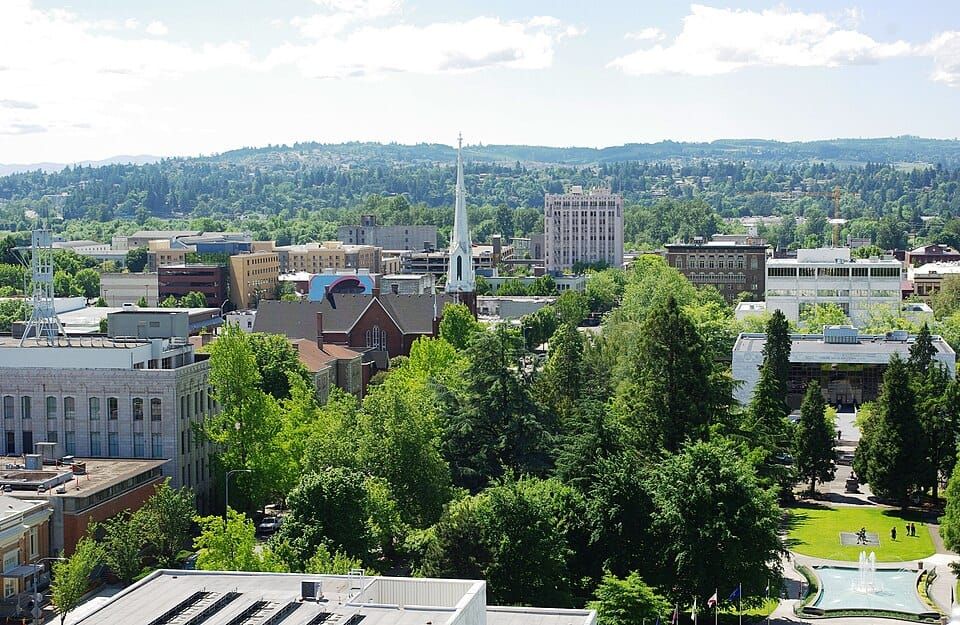
Municipal officials in Salem, Oregon, determined on August 28 that a land-use application for the proposed Verrus data center was incomplete, requiring the developer to supply missing administrative, environmental, and infrastructure details or face project voiding, according to the Statesman Journal.
Procedural Actions and Conditional Review in Salem
The proposed development, submitted under the name Alderstone for the Oakline at Mill Creek project on Mill Creek Drive, outlines two single-story buildings totaling 600,000 square feet. Per the Statesman Journal, city planning staff identified extensive omissions during their standard Type II completeness review. Required documentation includes LLC operating agreements, membership lists, unlabeled building markers, and technical clarifications regarding environmental protection and water usage.
City staff explicitly challenged Verrus's assumptions regarding its closed-loop cooling system, annual water demand, and predicted cooling requirements during hot weather. In addition, municipal staff requested verified noise documentation, confirmation that backup power will rely on battery storage rather than diesel generators, and two separate land-use applications for the site.
Under Oregon state regulations, applicants must be notified in writing of application deficiencies. Verrus has 180 days from its original submission date—until January 27, 2027—to provide the requested data or indicate that no further information will be submitted. Failure to respond within that window voids the application.
Alongside the completeness review, the Salem City Council voted unanimously on August 3 to initiate a temporary moratorium on artificial intelligence data centers. As reported by the Statesman Journal, the moratorium is not currently active because state law mandates public hearings and a 45-day notice period to the Oregon Department of Land Conservation and Development before implementation.
Strategies and Tactics from Companion Communities
Municipalities across the country are employing procedural checks, zoning constraints, and regulatory moratoriums to manage data center proposals.
1. Moratoriums and Regulatory Pauses
Temporary bans and legislative pauses are increasingly utilized to delay approvals while policy guardrails are reviewed. Following public opposition to OpenAI's proposed 3.2-gigawatt Project Camellia in Effingham County, U.S. Senator Raphael Warnock called for a statewide moratorium in Georgia, according to WSAV News 3. Warnock proposed that suspensions remain until projects guarantee no residential rate increases for water or electricity, no non-disclosure agreements, and clear limits on noise, light, and air pollution. Elsewhere, the Boston Herald reports that New York enacted a one-year pause on large new data centers, and Texas Governor Greg Abbott halted new grid connection approvals pending a regulatory audit.
2. Setback Distances and Siting Criteria
Facility location relative to residential areas remains a primary driver of noise disputes. In Williston, North Dakota, a data center constructed 800 feet from the nearest home resulted in a nuisance lawsuit over continuous cooling equipment noise, as detailed by the Boston Herald. Industry analysis suggests that placing facilities at distances of a half-mile or more allows cooling noise to blend into natural background sound.
3. Electrical Grid and Environmental Audits
Grid capacity and utility agreements heavily dictate fiscal outcomes. The Boston Herald notes that while the Williston facility connected to a constrained grid that shifted added transmission costs to local ratepayers, a facility in Ellendale, North Dakota, purchased stranded wind power, lowering local electricity costs by roughly $5 million in a single year.
Regulatory compliance regarding power generation is also undergoing strict enforcement. In Vineland, New Jersey, an investigation reported by Common Dreams revealed that the Microsoft-backed DataOne facility operated 45 gas-powered generators without permits near residential areas and schools, prompting an active compliance investigation by the New Jersey Department of Environmental Protection.
4. Grassroots Organizing and Transparency Demands
Public engagement around data centers is shifting toward structured advocacy. As reported by The Atlantic, former climate campaign organizers launched an organization named Irreplaceable to channel public concerns over energy demand and local impacts into systematic opposition. Concurrently, residents in host communities are demanding earlier public notice. In response to criticism regarding non-disclosure arrangements, the Effingham County Industrial Development Authority stated that preliminary confidentiality is standard practice for competitive site negotiations involving private land, per WSAV News 3.
What Remains Undecided
Several procedural and legal determinations remain pending across these jurisdictions:
In Salem, Verrus has until January 27, 2027, to satisfy the city's incomplete application notice, while the municipality's proposed temporary moratorium completes its required 45-day state notice and public hearing steps.
In Vineland, New Jersey, the Department of Environmental Protection's investigation into DataOne's unpermitted gas generators remains open, even as the local planning board voted to approve the facility's second construction phase, according to Common Dreams.
In Effingham County, Georgia, public hearings and state regulatory reviews for OpenAI's Project Camellia have yet to take place, as discussed by WSAV News 3.
Nationally, more than 300 data center-related bills filed across 30 states remain under legislative review, according to the Boston Herald.